
BYD's incredible Super E Platform

As I said at beginning of this year, BYD will showcase some really amazing tech this year when it comes to smart car technology and BEVs. As I wrote last month, BYD is bringing ADAS to everyone. That was quite the impressive news, because they made L2+ ADAS almost standard across the fleet without increasing price. They somehow managed to pull in enough of the ADAS supply chain to achieve such a huge ramp up in cameras, AI chips, radars and other hardware supplies.
In terms of tech, I think today’s unveiling of their new Super e Platform was even more impressive. I have tweeted out already a couple of incredible videos of BYD’s charging curve with this new platform here and here. If you need a picture of the incredible charging curve, just see below:
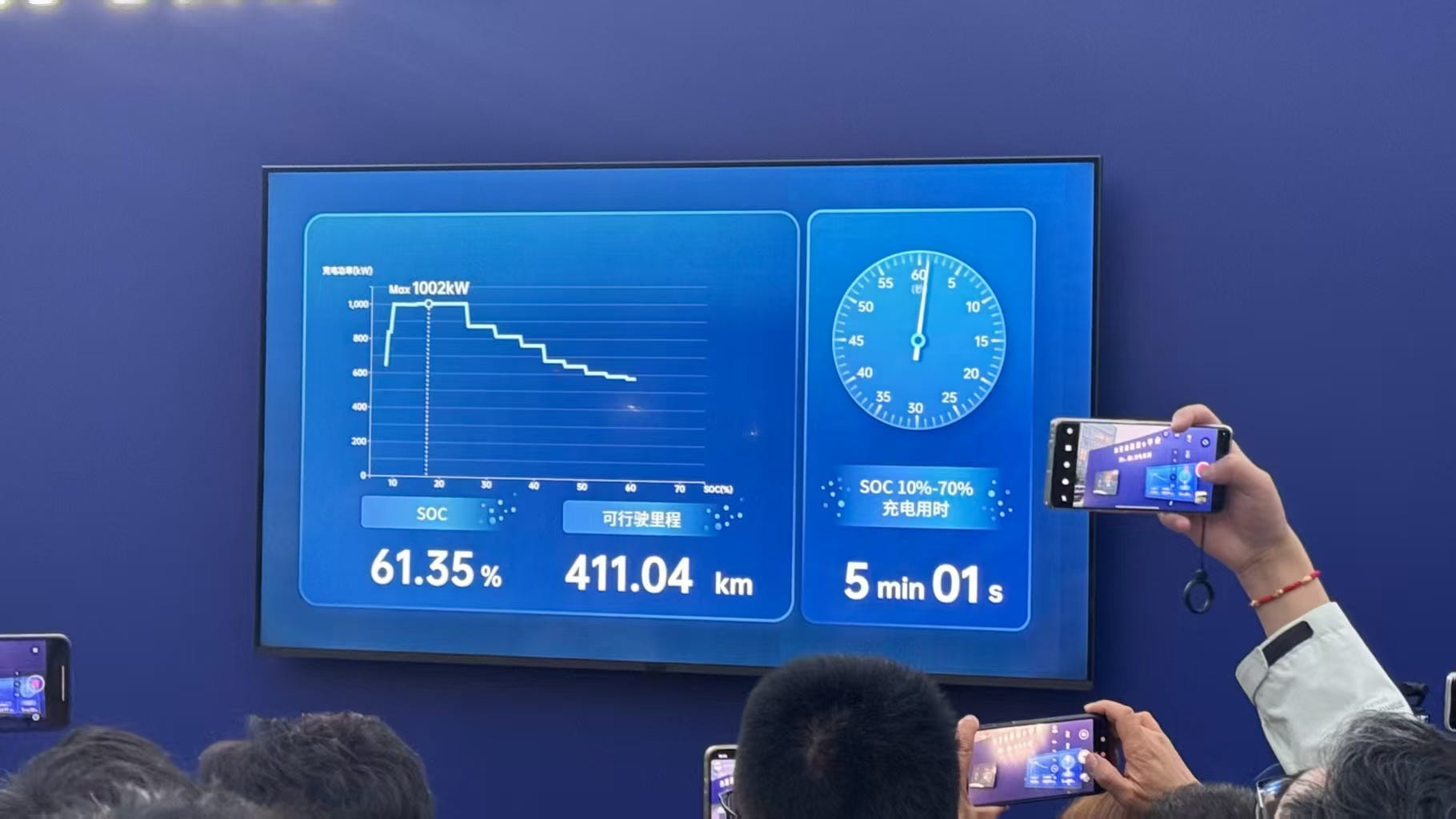
See, how it hit a peak of 1000kW from about 10% SOC to about 27% and then slowed down to 800kW and then 600kW. Even at 90% SOC, it was still going at almost 600kW. It took just 5 minutes to go from 10 to 70% SOC. 5 minutes of charging for over 400 km in range. The game has been changed. Now, the charging time for your BEV is almost as fast as refueling 70L at a gas station. It is almost as fast a going into a battery swapping station, slowly driving into the swapping area, getting swapped and then coming out slowly. Of course, battery charging tech will continue to improve. BYD has shown that charging time will no longer be an issue in the future.
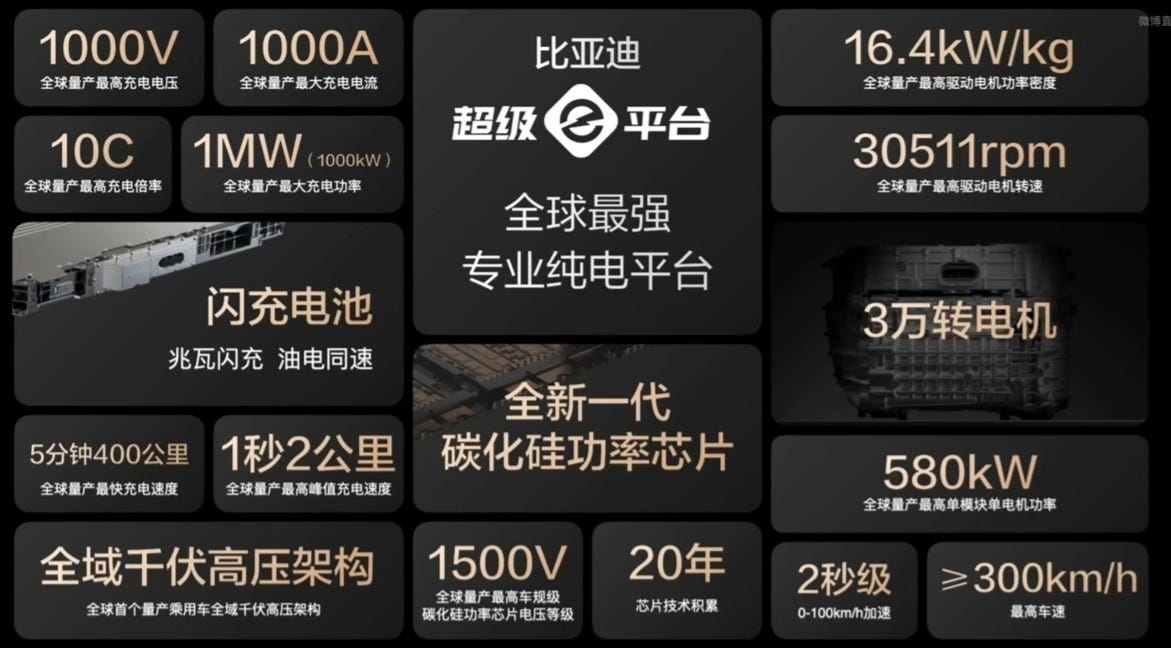
This is the summary of this game changing new e Platform. 1000V, 1000A, 1MW and 10C are all you need to know to understand the high voltage, low resistant battery cell and packing technology that enables this high speed charging rate. It uses a fully 1000V high voltage platform as you can see below.
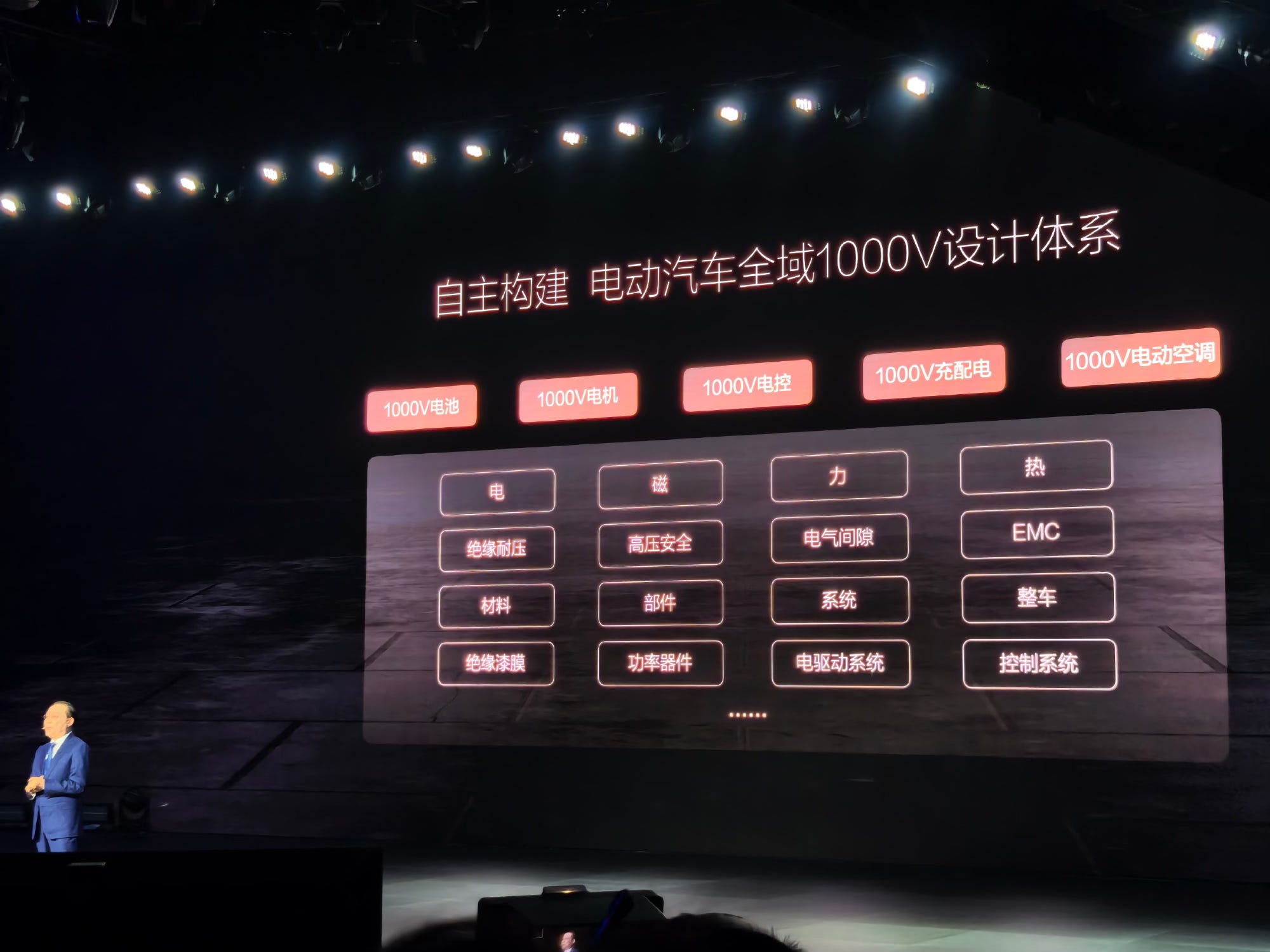
That would include 1000V battery, electric Motor, electric Control, charging system and Air condition unit.
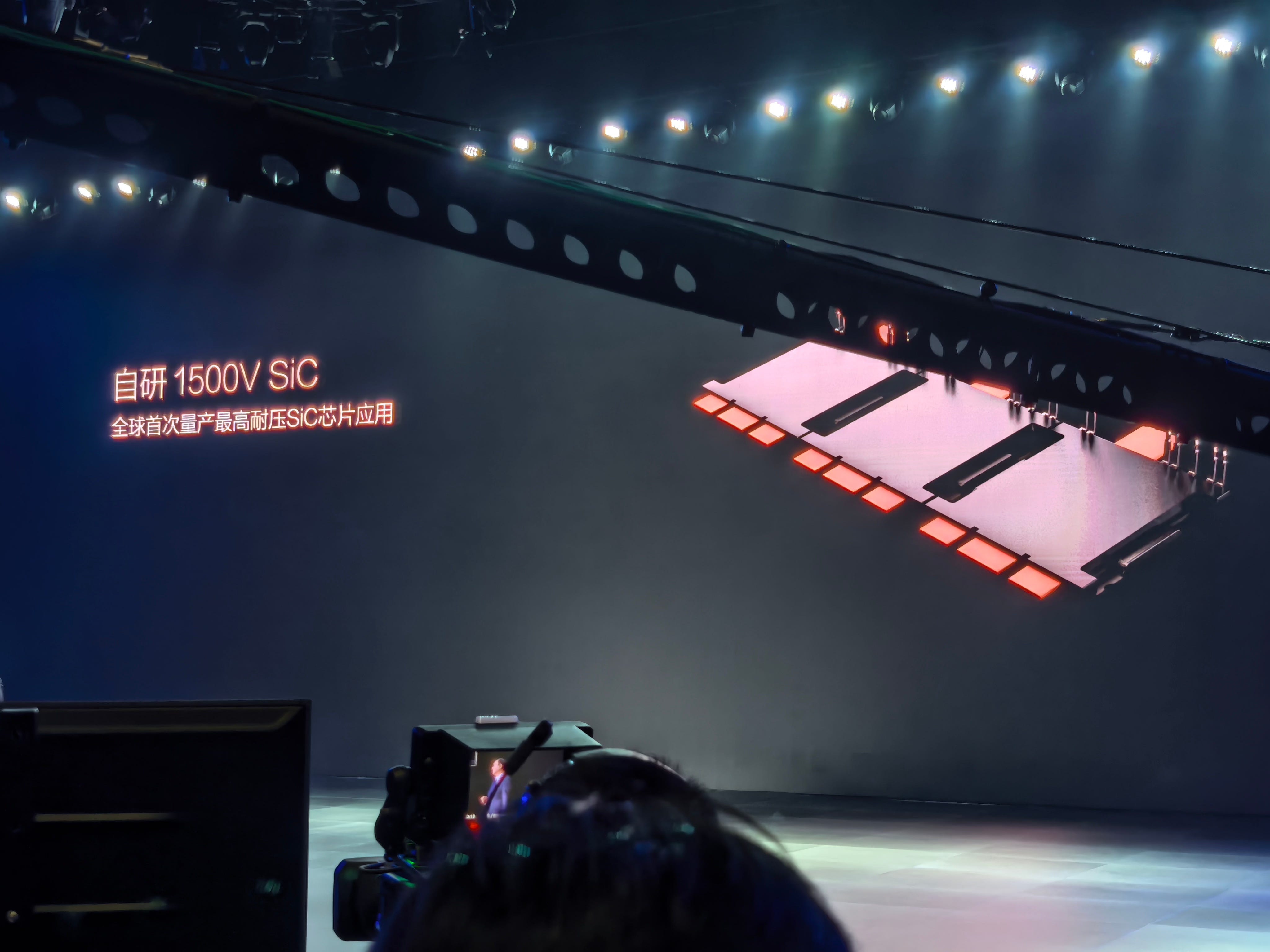
It is also enabled by a self developed and produced 1500V SiC high voltage chip/module. It is possible that we will see 1200V platform for Denza or YangWang in the future once 1500V SiC production gets ramped up.
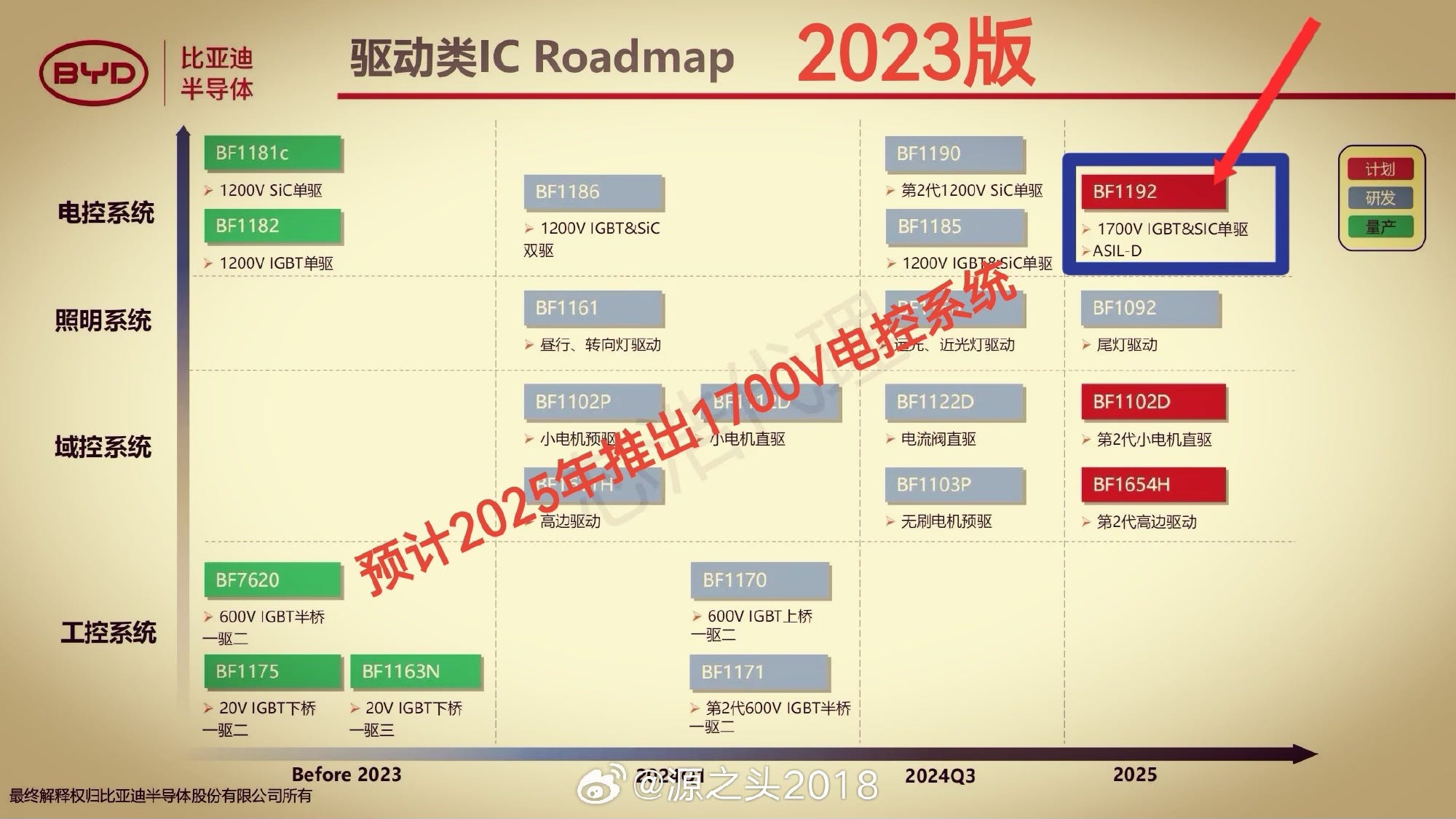
A look at BYD Semiconductor’s Driver IC Roadmap from 2023 shows that 1700V BF1192 IGBT and SiC control chip will be ready this year. Will this new power driver IC enable the even higher voltage platform? I would think so.
Remember, higher voltage means lower amp needed to reach the same power. Lower amp means less heat generated against battery cell of the same resistance. Higher voltage also allows more power to be packed tightly in your electric motor, so you can build more powerful and/or more compact electric motors. All of this allows you to build more powerful EVs or similarly powerful, but lighter weight ones. And, we can see this new powerful electric motor appearing today.
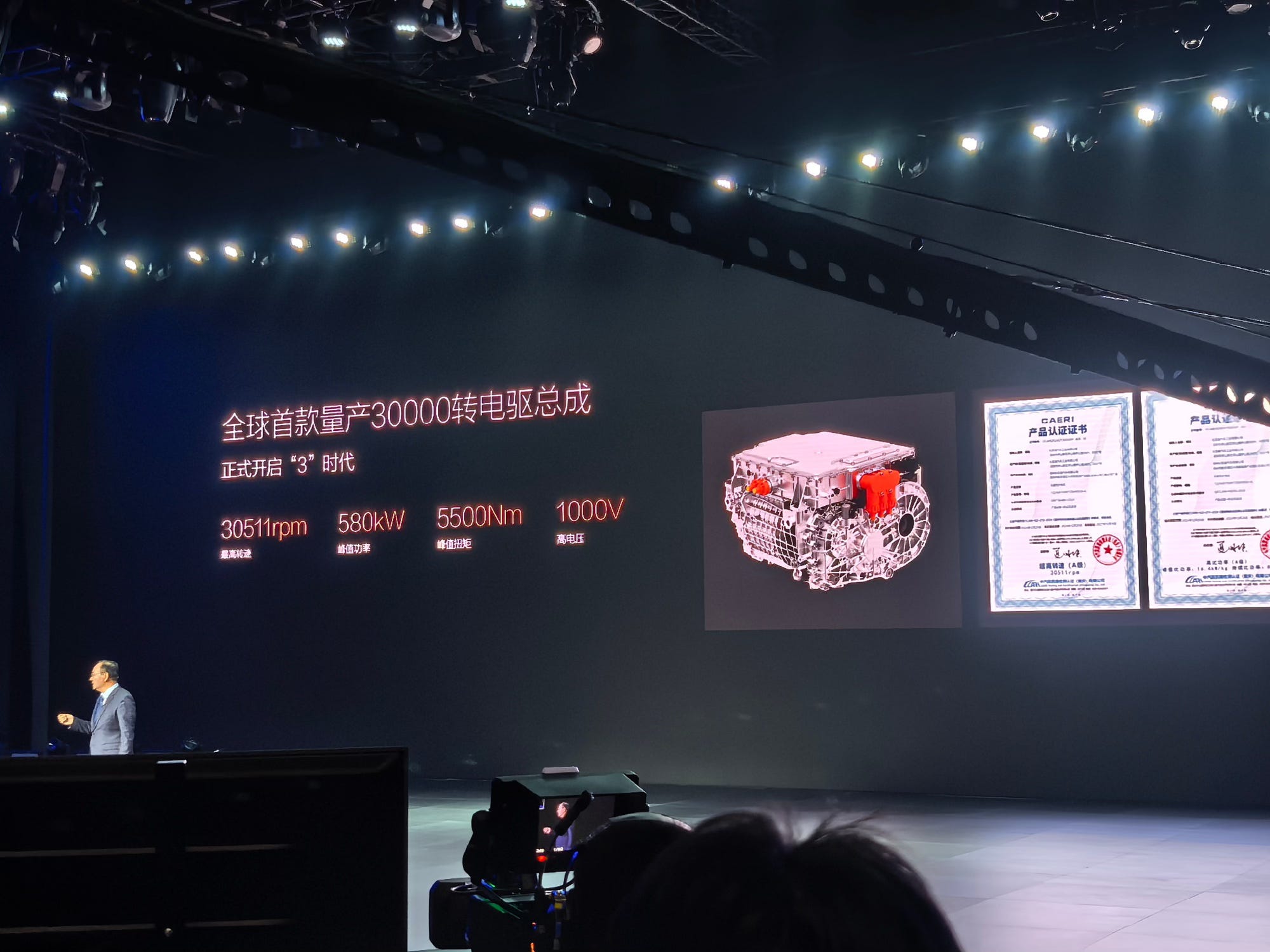
It has achieved as high as 35000 rpm in lab testing, but they are conservatively setting it to 30511 rpm in practice. A single rear motor now generates 580kW of power and 5500Nm of torque. BYD testing of Han L showcased its flagship Sedan reaching acceleration of 2.7s from 0 to 100 km/h and then 4.7s from 100 to 200 km/h before peaking at > 300 km/h. In practice, they are advertising 270 km/h top speed, but it can certainly reach over 300. For the large Tang L SUV, it reached 3.6s from 0 to 100 km/h and then 6.19s from 100 to 200 km/h before peaking at 287 km/h. Those are incredible numbers for a large sedan and SUV expected to be selling in the 250 to 350k RMB range. In fact, that would beat the top speed and acceleration of Xiaomi Su-7 Max. BYD was not content on just matching Su-7’s top line performance. It had to exceed it on all the most important metrics.
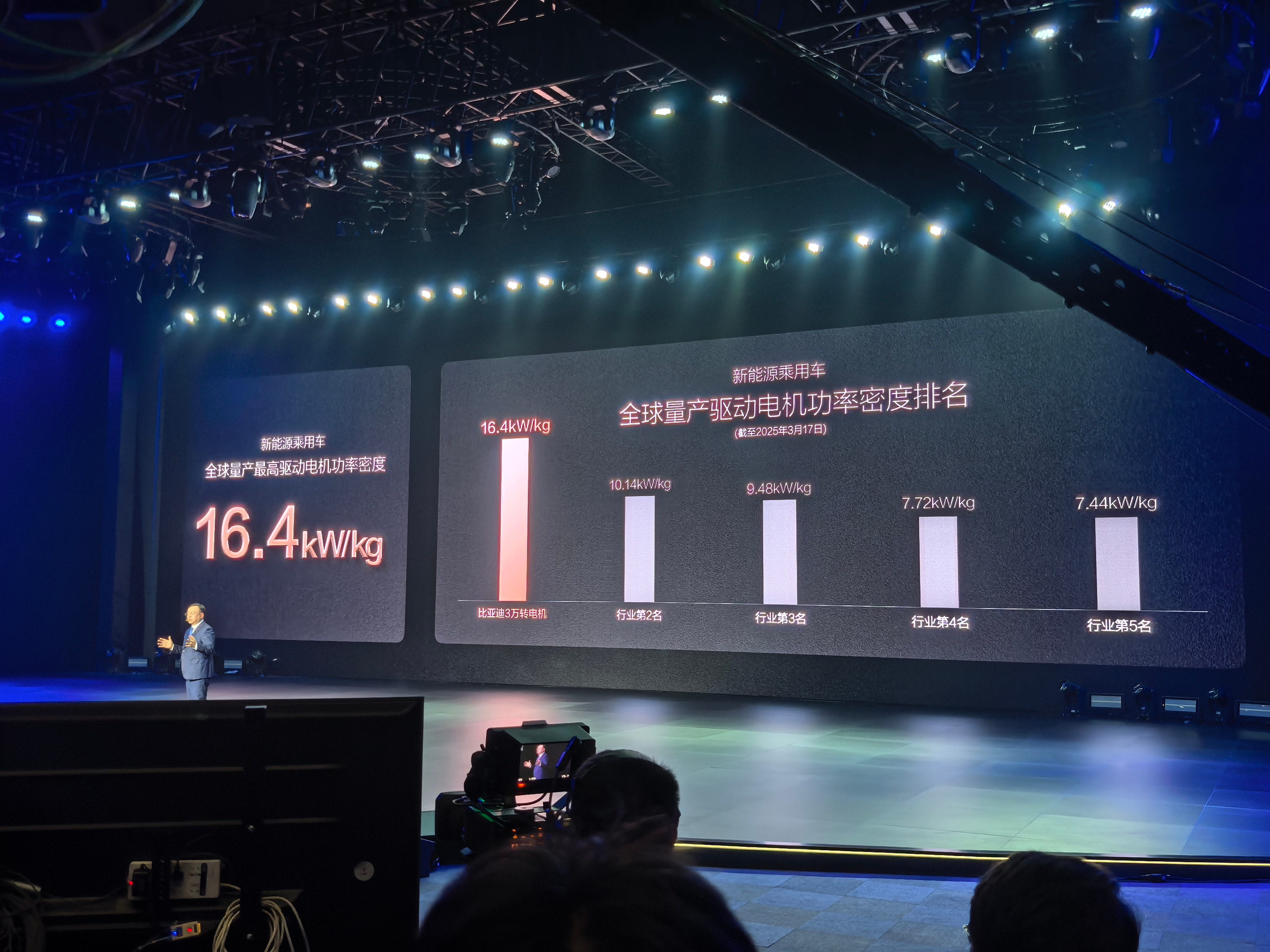
The next photo show the gap in power per kg of BYD’s new 580kW electric motor compared to the next best. It is 60% better than the second best.
Now, if we look at the charging rate of its new ePlatform over the second best, the difference is even large. We go from 6C and 600kW in the current top models straight to 10C and 1000kW. That is an improvement of 67%!
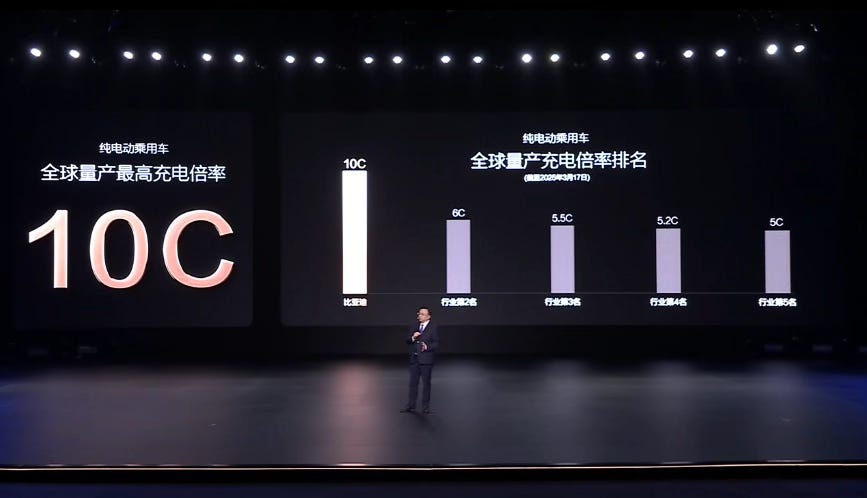
Can you imagine that in an age where all the Chinese EV makers are fighting tooth and nails for a slight edge over their competition, BYD managed to get a 60%+ edge against everyone else? That is unbelievable.
In some ways, this technology edge is due to its leading position in both battery design and semiconductor design. When you can design battery chemistry and pack them in a way that allows for high voltage and low resistant and pair that up with the latest high voltage power modules that nobody else has, only you can develop the high voltage, high power, highly compact and efficient platform that lead the competition.
One might ask why BYD did not lead in battery electric technology until this year? Well, BYD only land in the leading edge of power semiconductor technology this year. It will be the world’s leading Silicon Carbide producer, designer and consumer. It will put many of its power semiconductor competitors out of SiC business.
I will talk more about Han L and Tang L and Super E Platform in the future, because this is a seismic event in China’s EV industry. Can you imagine BYD has a few more major tech unveilings for the rest of this year? Although, I doubt they will be as impactful as the ADAS event or this event.
The UK power grid will not be able to support mass adoption of electric vehicles. We are already installing dynamic load balancing to turn down chargers at busy times!
Is there a video recording of the entire event?